2 Important Decisions to Make Before You Start Writing a Science Fiction Novel
Published October 6, 2026
ou have a science-fiction idea. Then you remember you haven’t designed the economy, named the neighboring planets, or explained how the toilets work in low gravity.
The story begins to look like a research project with occasional dialogue.
What two decisions give your science fiction novel a workable starting point?
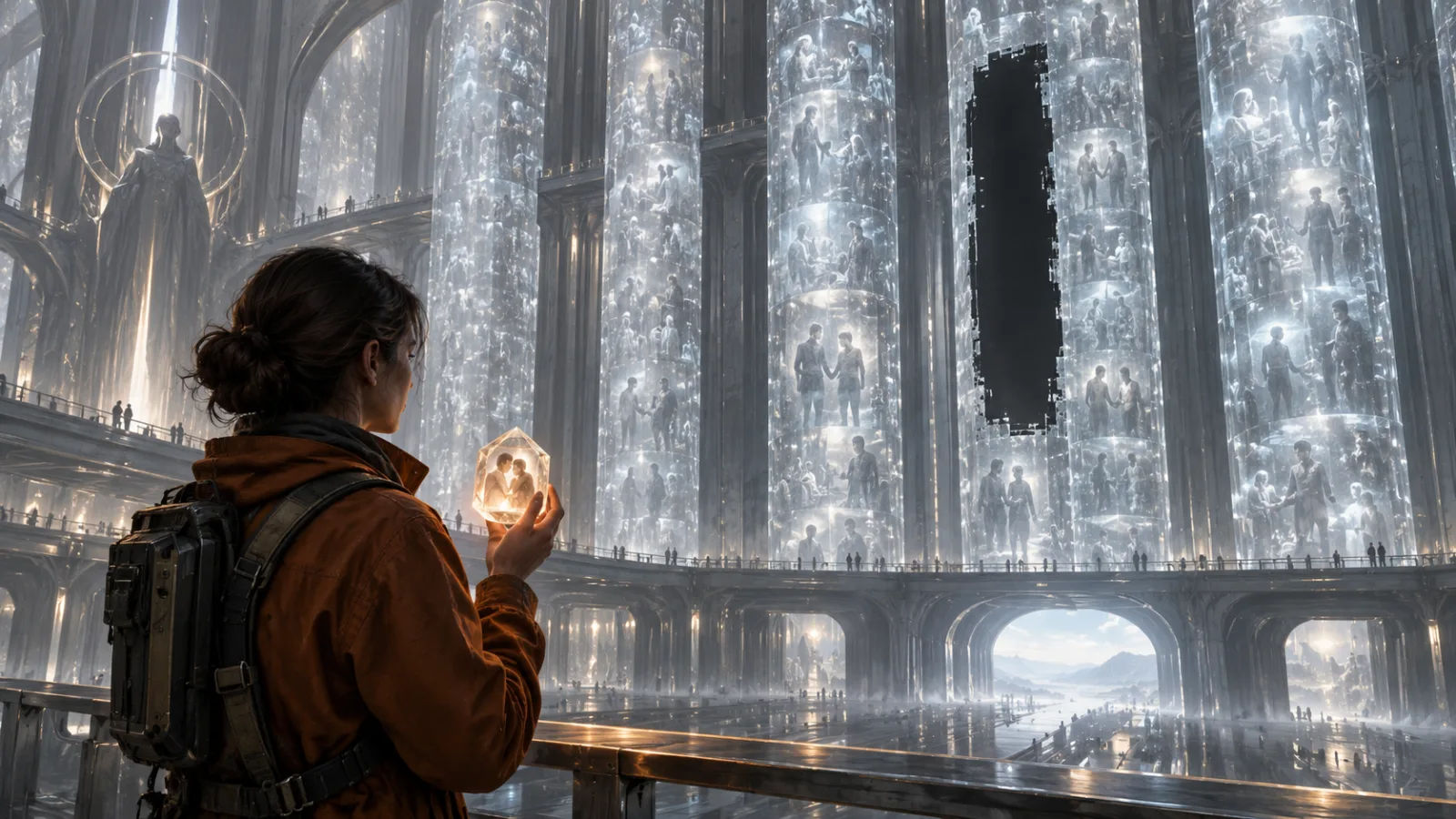
Decide what is different about this world, then decide whose life that difference makes difficult. Those answers give you a focused brief to develop in Lorika before the background expands beyond the book it was meant to support.
They won’t settle every writing decision. They will give you something worth writing about.
1. What has changed, and where does that change stop?
Choose the central difference that makes this story possible.
Perhaps memories can be stored outside the body. Perhaps a colony receives messages from Earth that arrive out of order. Perhaps people can briefly borrow another person’s senses.
A clear change is easier to explore than a collection of impressive technologies with no connection between them.
Let’s use an original example. A city stores its citizens’ memories in a shared archive, and a technician discovers that one ordinary day has disappeared from every record.
Now give the technology a useful limit. The archive stores what people consciously remember, not an objective recording of everything that happened. Two people can preserve conflicting versions of the same event.
That limit creates story possibilities. The technician can’t simply press a button and receive the truth. She has to decide whose account to trust and why the missing day matters.
You can explore the consequences without explaining every wire in the archive. If a technical detail becomes important to the solution, establish it clearly before relying on it.
For now, record the central change and the limitation that makes your character’s problem difficult.
2. Who has the most personal reason to care?
A missing day is intriguing. A missing day containing the technician’s last conversation with her father gives the intrigue an emotional direction.
Choose the person for whom your speculative idea creates a concrete problem.
What do they want? What might they lose? Why can’t they leave the situation to someone better qualified?
Our technician wants to recover the conversation. Her employer wants the gap quietly closed. Her younger brother wants her to stop digging because the search is beginning to threaten what he remembers about their family.
These relationships let the central idea affect ordinary needs. Work, loyalty, grief, and trust can make an unfamiliar world feel close enough to enter.
You don’t need to make the protagonist the most powerful person in the setting. A person with limited options may have more interesting choices to make.
Put the two answers together
Your brief can now explain both the speculative premise and the personal story.
A memory-archive technician searches for a day erased from the city’s records because it contains her last conversation with her father, but every surviving memory comes from someone with a reason to misremember.
That sentence gives Lorika’s writer’s assistant a direction. Add the tone you want, choose the relevant book characteristics, and develop the technician through her wants, fears, and relationships.
When you review a proposed story direction, ask whether it uses both decisions. The memory system should create the problem. The character’s personal need should make the investigation matter.
If the story could happen unchanged without the technology, develop the connection. If the technology is interesting but nobody has a reason to act, sharpen the personal stakes.
Your planet can acquire more history when the story needs it.
Start your science fiction book in Lorika with one meaningful change and the person whose life it disrupts.