3 Ingredients of a Dark Romance Villain Beyond Being the Bad Guy
Published October 17, 2026
Your dark romance villain can threaten people, make cruel decisions, and look alarmingly comfortable in an expensive coat.
That still leaves a useful question unanswered.
What do they want badly enough to keep interfering with this particular relationship?
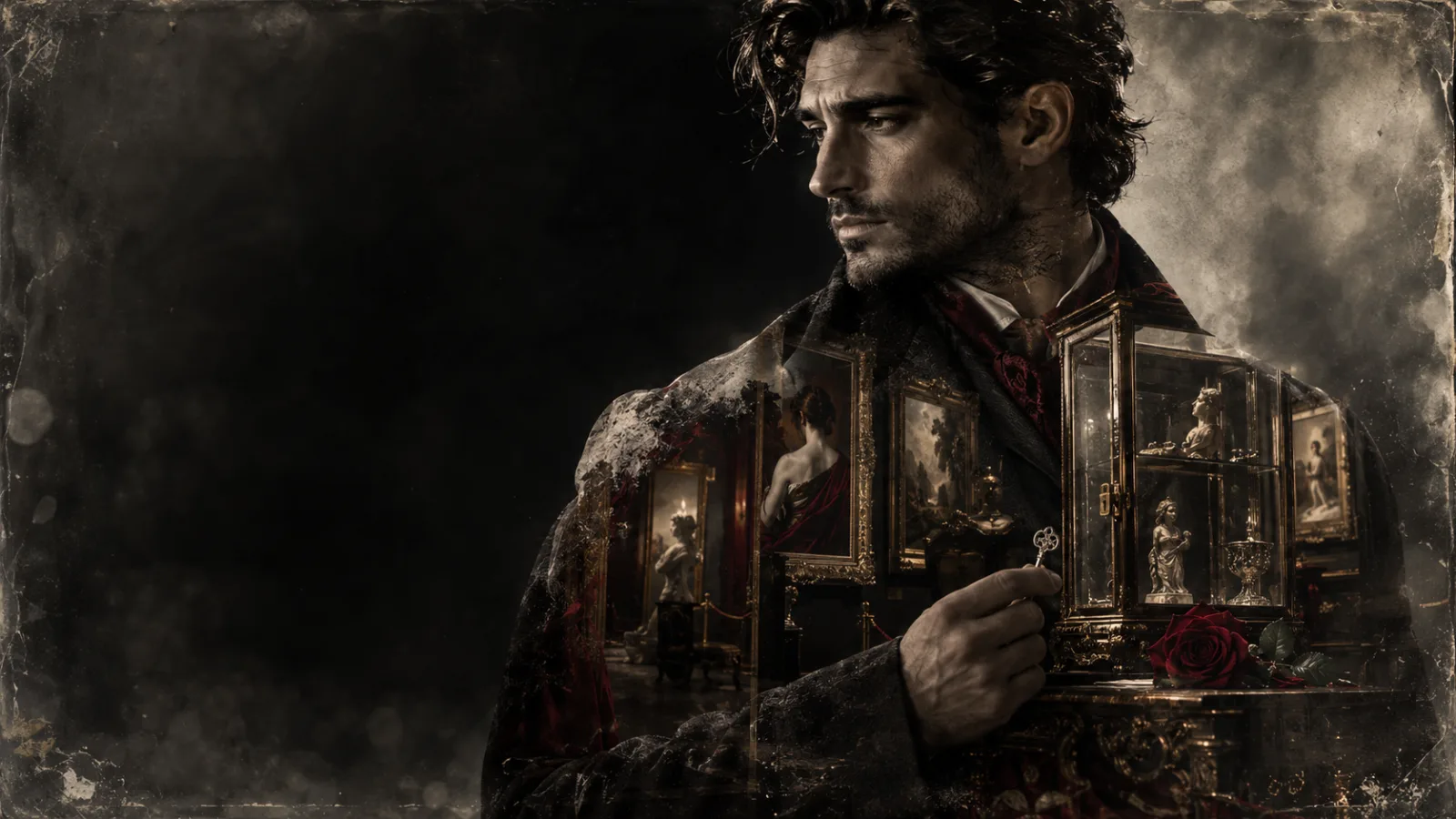
A convincing antagonist needs pressure behind the menace. Three ingredients can help you build that pressure in Lorika’s character cards, so the villain affects the story instead of arriving whenever the chapter needs something unpleasant to happen.
The antagonist does not have to be the love interest. Keeping those roles separate can make the conflict clearer.
1. A desire with a concrete target
Give the villain something they are trying to achieve.
“Power” is a starting thought. Control of a shipping company before a rival family inherits its deciding share gives you actions to write.
For an original example, imagine a romance between a restorer and the heir to a private art collection. The antagonist is the heir’s guardian, who has managed the estate for years and wants to keep control of its most valuable painting.
The restorer discovers that the painting’s official history is false. Her relationship with the heir now threatens an arrangement the guardian depends on.
The villain has a reason to watch them, separate them, or manipulate the information they receive.
A specific target gives the cruelty a direction.
2. A motive that explains the pressure
Next, decide why the target matters so much.
Perhaps the guardian believes the family owes him for the years he spent protecting the estate. Perhaps the painting conceals a financial deception that would destroy the identity he has built.
An explanation helps you write coherent choices. It does not require the reader to excuse them.
The guardian might sincerely believe that everyone benefits while he remains in control. That belief can make his politeness more unsettling. He offers help that always creates an obligation. He remembers what people need and makes access depend on their loyalty.
In Lorika, connect the motive to the character’s deeper want and inner fear. He wants authority because losing it would force him to admit that his position was never the same thing as belonging.
Now a simple refusal can provoke a meaningful reaction.
3. Leverage over the central conflict
A villain becomes a sustained obstacle when they can affect something the protagonists care about.
The guardian might control access to the archive the restorer needs. He may know a truth the heir has been avoiding. He may have arranged the employment that lets the restorer support someone at home.
Choose leverage that puts pressure on decisions, rather than relying on an endless supply of anonymous threats.
If the restorer reveals what she has found, she risks losing access to the evidence. If the heir protects her, he may have to question the person who raised him.
Their relationship is now part of the conflict because trust has consequences.
The villain cannot be removed from the story without changing what the protagonists must choose.
Put the ingredients into a scene
Consider a dinner where the guardian casually offers the restorer a better contract elsewhere.
His stated intention is generous. His desire is to remove her. His motive is to preserve the arrangement around the painting. His leverage is knowing that she needs reliable work.
The scene can remain quiet while carrying a real threat.
Develop that combination in the character card, then review the chapter for whether the behavior fits. A villain who normally controls people through favors may reveal more by withdrawing one than by delivering a dramatic speech.
Let their choices leave consequences
The antagonist’s influence should change the book. A threat alters a plan. A withheld fact damages trust. A failed manipulation forces a riskier move.
You can make them frightening without making them all-powerful. Limits give the other characters something to discover and resist.
Create your dark romance antagonist in Lorika with a clear desire, a personal motive, and something real to hold over the story.