Another ChatGPT Prompt, Still No Finished Book. Try Lorika Studio.
Published October 3, 2026
You’ve asked ChatGPT to continue the chapter. Then you’ve explained what continue means. Then you’ve reminded it that the mysterious stranger is already dead.
Somewhere in all of this, you were hoping to write a novel.
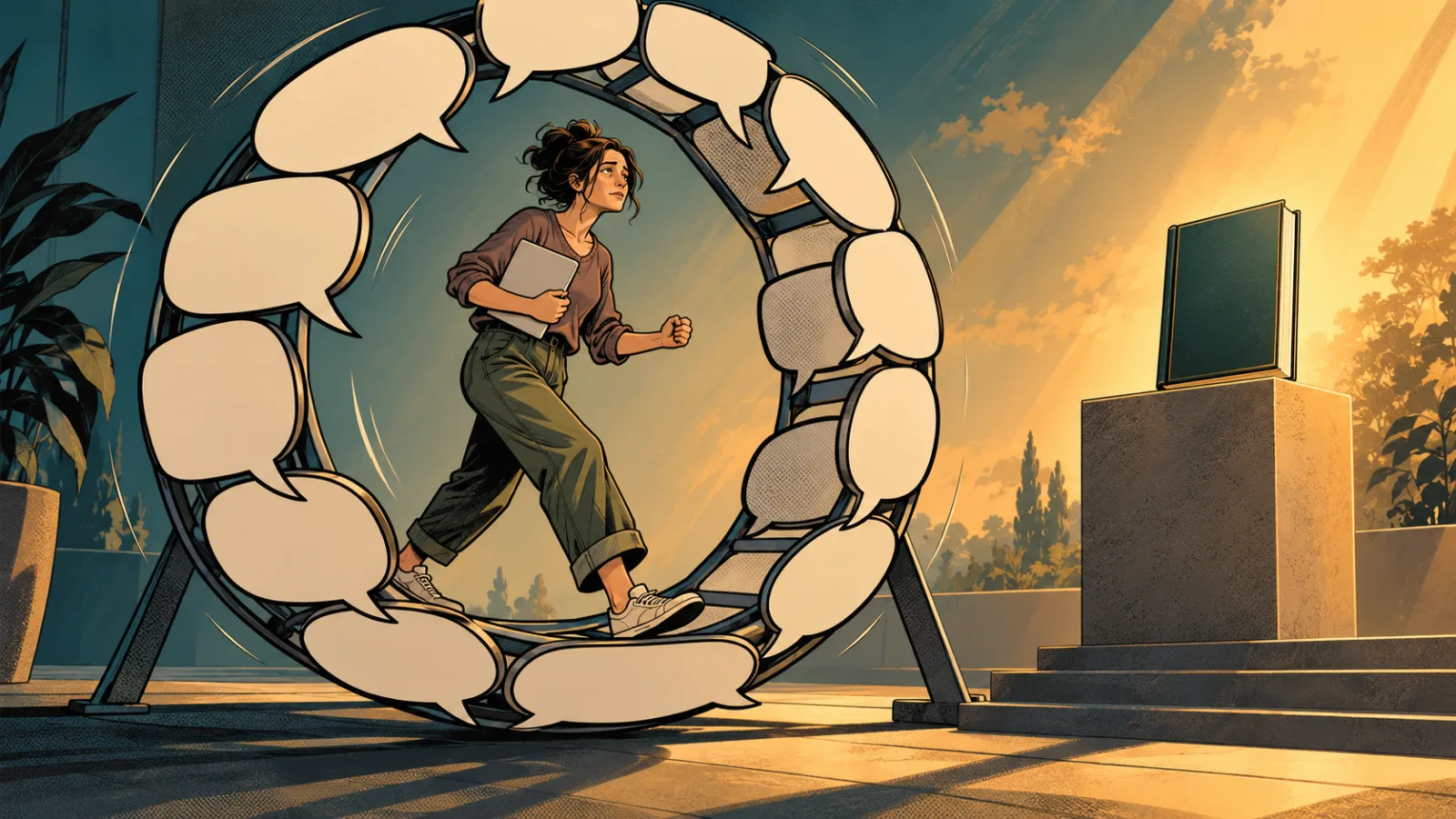
If the conversation has become a long sequence of corrections, copied passages, and increasingly careful instructions, another prompt may feel like more of the same work.
Why does another writing prompt still leave you without a finished book?
Sometimes the bottleneck is the process surrounding the words. You’re deciding the story, managing context, organizing the material, and translating each decision into a fresh instruction. A guided book workspace can make those jobs easier to follow.
Recognize the loop you’re stuck in
A useful session has a clear result. You settle a character’s motive, develop a chapter, or revise a scene so it does what the book needs.
A prompting loop feels different. You spend the session improving the instruction that might eventually produce that result.
The distinction matters because better wording can feel like progress even when the book remains exactly where you left it.
This frustration appears in a WritingWithAI discussion about using ChatGPT for a novel, where a writer describes repeated attempts to fix their workflow. That is one person’s experience, not a verdict on every model or every writer. But if you recognize the pattern, it gives you a useful question to ask about your own process.
What would help you make the next story decision and carry it forward?
Give the book a structure you can work inside
Lorika Studio starts with a book project. You choose characteristics, describe your idea, explore a direction, and develop characters before continuing into the chapters.
Those stages turn a broad ambition into decisions you can see.
Imagine an original fantasy premise about a lighthouse keeper whose light attracts lost memories instead of ships. You want a warm, strange adventure about deciding which memories deserve to return.
In a guided setup, that description becomes material you can review. Does the proposed direction preserve the warmth? Is the keeper’s personal problem clear? Is the story becoming an adventure, or drifting into a different kind of book?
You can make those choices before asking the next chapter to carry them.
Work with characters as part of the project
A character description is useful when it affects what the person does.
Our lighthouse keeper wants to recover the memory of her mother’s voice. She fears discovering why it disappeared. She changes the subject whenever someone asks about the locked room upstairs.
Lorika’s character cards hold details such as wants, fears, relationships, and speech patterns. That gives you a structured place to develop the people who will drive the book.
You still need to read what happens on the page. The benefit is having a defined character to compare it with, rather than repeatedly rebuilding the description from scattered messages.
Make the next chapter the unit of progress
Instead of treating the session as an open conversation about the entire novel, identify the chapter you’re developing and the change it needs to create.
Perhaps the keeper finds a memory belonging to someone who is still alive. By the chapter’s end, she should have a reason to leave the lighthouse and find them.
That is a concrete job. You can read the chapter and judge whether it happens convincingly.
Lorika’s workspace shows the ongoing project, chapters, summaries, and progress. As you continue, those pieces help you return to the same developing book rather than begin another discussion around it.
The finished result still depends on your direction and review. A guided process makes those responsibilities more visible.
Choose the workflow that helps you continue
You don’t need to turn your frustration into a debate about which tool is best at everything. Your practical question is narrower.
Does this process help you finish the book you’re trying to write?
If your current answer is another page of instructions and no next chapter, trying a different workflow is reasonable.
Build your next book with Lorika Studio and put your next decision into the story.