Get Help Writing Your Book Without Losing Control of the Plot
Published October 19, 2026
You want help writing the book.
You would also quite like it to remain the book you wanted to write.
That becomes a practical concern when a suggested scene changes the relationship, adds a villain, or takes your quiet adventure somewhere louder than you intended.
Which story decisions stay yours when you use a writing assistant?
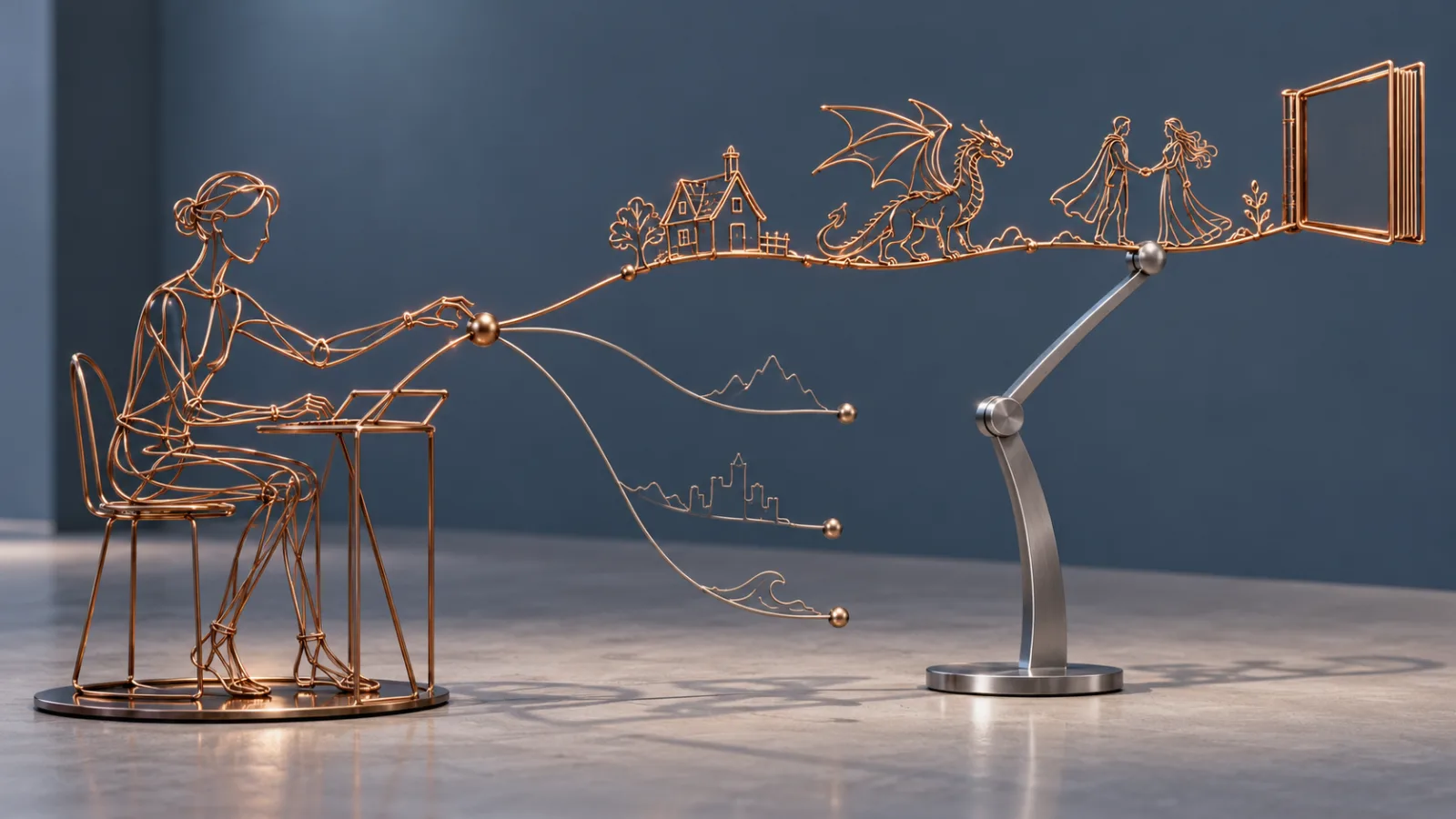
In Lorika, you choose the premise and characteristics, review proposed directions, develop the characters, and read and edit the chapters. Those decisions are how you keep the project connected to your intention as the material grows.
Know what you want to protect
Before developing more of the story, identify the few things that make this book matter to you.
Imagine an original cozy fantasy about a baker who discovers that the town’s guardian dragon is afraid of people. You want the book to explore a cautious friendship, with gentle humor and a problem the town can solve together.
A proposed direction involving an invasion might be exciting. It could also move the book away from the experience you came to create.
Write down the core intention in plain language. The baker and dragon should learn to trust each other. Their differences should create friction without turning either into a fool. The ending should preserve the town’s warmth while changing how it understands its guardian.
Those are useful decisions to keep returning to.
Treat a suggestion as something to choose
Lorika’s setup offers possible story directions based on your brief. Review them for fit, not simply for polish.
A confident paragraph can make an idea feel settled before you have decided whether you want it.
Ask what interests you in the direction. Ask what pulls you away from the original promise. You might like a visiting inspector but dislike the idea that the dragon secretly caused every problem.
Keep the useful part and adjust the rest before moving forward.
Choosing a suggestion is part of authorship. So is refusing one that would make a different book.
Make characters carry your intention
The baker’s personality will shape how the story treats the dragon.
If she responds to every unfamiliar thing with suspicion, the friendship begins differently than if she responds with curiosity and poor timing. Both can work, but they create different scenes.
Lorika’s character cards let you develop wants, fears, relationships, and speech patterns. Use them to express the behavior you want to explore.
The baker might want to keep her late father’s shop open. The dragon might fear harming someone by accident. Their first conversation can bring those needs together when the dragon’s anxious breathing ruins an entire morning’s bread.
The scene now follows from the people, rather than requiring them to become whoever a convenient plot needs.
Review at the points where direction changes
You don’t need to reconsider the whole novel after every paragraph. Pay attention when a development changes what the book is about.
A new goal, a major reveal, or a relationship decision deserves a deliberate check. Does it grow from what came before? Does it create a consequence you want to explore? Does it preserve the reader experience you promised?
Read the setup before creation, then continue reviewing as the chapters develop. If something moves away from your intention, edit the relevant material before building more around it.
That is easier than carrying an unwanted choice for ten chapters and hoping it will become your favorite part.
Leave room to be pleasantly surprised
Control does not require deciding every detail in advance.
You can discover a better conversation, a stronger motive, or an unexpected small kindness while working. The useful distinction is whether you choose to carry that discovery forward.
Your book can evolve without becoming unrecognizable to you.
Choose your next story direction in Lorika and build it around the decisions that make the book yours.