Turn One Fanfic Scene Into a Complete Story in 5 Steps
Published October 11, 2026
You can see the confrontation perfectly.
The door opens. The person everyone thought was dead steps inside. Someone drops a glass, because a dramatic entrance should at least inconvenience the cleaning staff.
You’ve imagined the dialogue. You know the feeling you want.
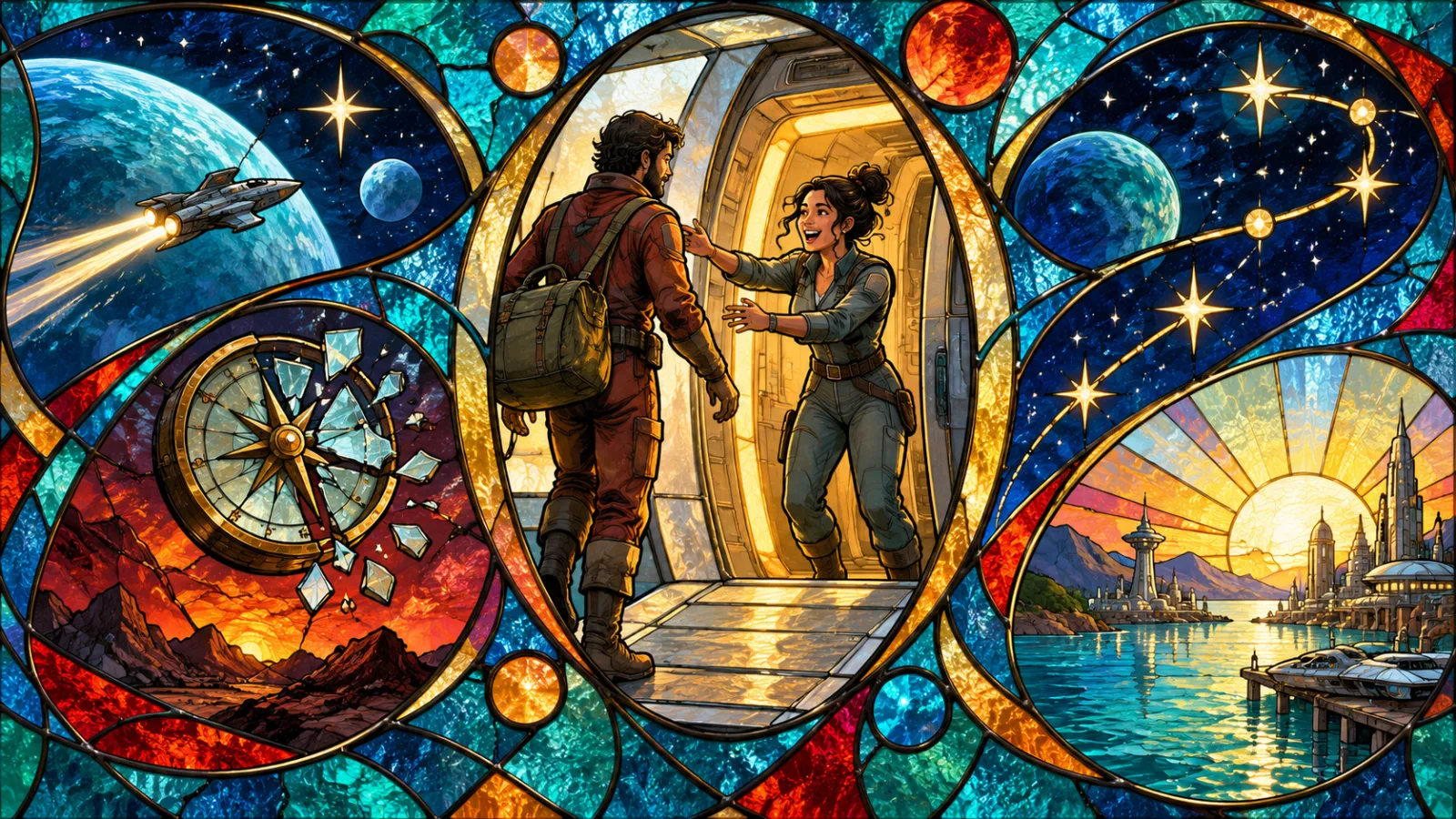
What you don’t have is the rest of the fanfic.
How do you build a complete story around one scene?
Treat the scene as a turning point. Find what earns it and what changes because of it, then develop those connections in Lorika. These five steps give your favorite moment somewhere to belong.
1. Find the change inside the scene
Before expanding the story, identify what makes the moment worth keeping.
A reunion may change grief into anger. A confession may change trust into suspicion. A victory may reveal that the characters wanted different things all along.
For an invented example, let’s use a fantasy crew whose missing navigator returns during a celebration. Her closest friend is relieved until she realizes the navigator chose not to contact them.
The emotional turn is not simply that someone returns. It is that a comforting explanation becomes a painful question.
Write that change clearly. It will help you decide which surrounding events actually belong in the story.
2. Establish what caused it
Work backwards only as far as the reader needs.
What does the friend believe before the door opens? Why has the crew gathered? What makes this particular evening the worst possible moment for the navigator to return?
Perhaps they are celebrating the sale of their ship because the friend can no longer bear searching. The returning navigator arrives just as the contract is signed.
Now the reunion has practical consequences as well as emotion.
You don’t need to explain every day of the search. One or two meaningful scenes can show what the absence has cost and why the friend has made this decision.
3. Choose the obstacle the reunion cannot solve
Finding each other should not automatically resolve the story.
The navigator may have stayed away to keep a dangerous passenger from reaching the crew. She returns because the passenger has escaped. The friend thinks this is another explanation designed to excuse abandonment.
They need to work together, but the relationship that once made cooperation easy is damaged.
That is a useful central obstacle. It can generate decisions rather than simply delay an apology.
In Lorika, describe the characters’ different wants and fears. One wants to protect the crew without revealing everything. The other wants the truth before agreeing to help again.
4. Follow the consequences toward an ending
Ask what the characters must now do because the scene happened.
The ship is sold. The escaped passenger is approaching. The crew must decide whether to believe the navigator and persuade the buyer to delay departure.
Choose an ending that resolves the story’s central question. The friend may agree to trust the navigator only after she gives up something concrete to prove she intends to stay.
The resolution should grow from action. A heartfelt explanation can matter, but it becomes more convincing when the character accepts a cost they previously avoided.
You now have a path through the scene, rather than a scene with background attached.
5. Develop and review the chapters as one journey
Give Lorika the premise, the emotional turn, and the character pressures you have chosen. Review the proposed direction before developing the chapters.
As the story takes shape, ask whether each section prepares, changes, or resolves the central conflict.
The opening should make the absence matter. The reunion should disrupt something already in motion. The following chapters should deal with the consequences rather than return everyone to their earlier positions.
Read the favorite scene again after the surrounding material exists. You may discover that a quieter line now carries more weight than the speech you originally imagined.
That is a good problem to have.
Keep the scene’s reason for existing
Expansion can tempt you to add another villain, another journey, and a secret royal connection nobody requested.
Return to the change you identified in the first step. Does the new material make that experience stronger?
You can create a complete short fanfic or develop a longer book from the same method. The useful measure is whether the story earns its central moment and follows it to a satisfying consequence.
Bring your fanfic scene to Lorika and build the story that lets it matter.